AI-Enhanced License Plate Recognition for Smarter Parking Enforcement
Significant reduction in repeated scans for difficult plates
Faster permit validation for enforcement officers
Production-ready AI deployed in real-world conditions
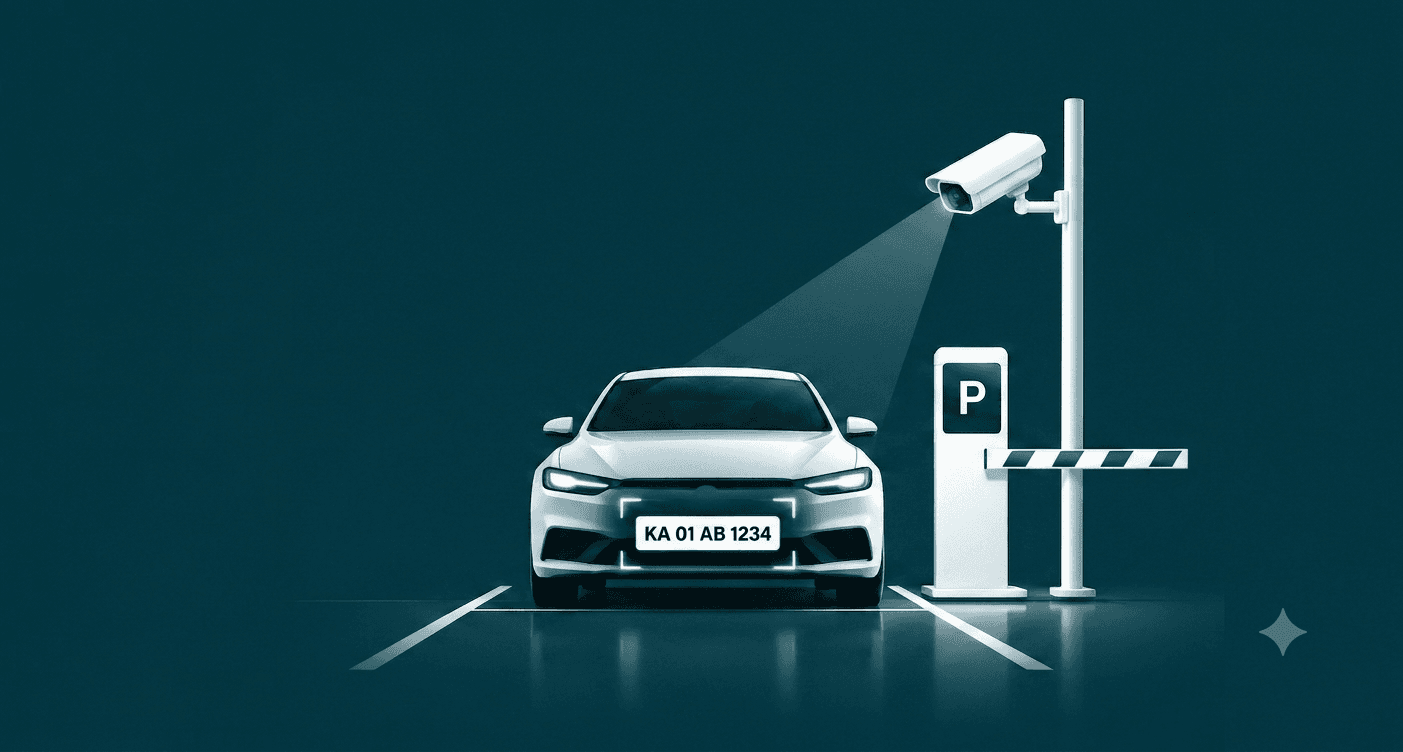
Improving license plate detection and permit validation in challenging real-world conditions.
Parking enforcement officers rely on a mobile application to scan vehicle license plates and determine whether a vehicle has a valid parking permit. We designed an AI-assisted LPR processing layer around the existing enforcement workflow — adding intelligent image-processing and recognition logic to dramatically improve accuracy in difficult environments.
Real-world enforcement is far messier than the test lab.
In ideal conditions, conventional LPR technology can identify a license plate quickly. But real-world parking enforcement environments introduce a range of challenges that degrade recognition accuracy.
Snow, mud, glare, damaged plates, poor lighting, motion blur and awkward angles all conspire to make reliable plate reading extremely difficult. When the plate cannot be read, the enforcement workflow slows down — requiring manual verification or repeated scans.
The client needed a smarter LPR layer that could handle these conditions reliably at scale, without adding friction for officers in the field.

Our AI Engineering approach
A seven-step intelligent pipeline — from capture to enforcement decision.
Image Capture
The officer scans a vehicle using the mobile enforcement application. Image quality varies widely depending on lighting, angle and plate condition.
Quality Assessment
The system evaluates the captured image against a set of quality signals — sharpness, lighting, occlusion and angle — to determine how it should be processed.
AI-Assisted Enhancement
Based on the quality assessment, the appropriate image processing pipeline is applied. This may include denoising, contrast enhancement, deblurring or occlusion handling.
LPR Recognition
The enhanced image is passed through the LPR recognition engine, which attempts to extract a plate number with the best possible confidence score.
Confidence Validation
The recognition result is evaluated against confidence thresholds. Low-confidence results can trigger a retry, fallback handling or an escalation path for manual review.
Permit Verification
The recognised plate number is used to query the parking permit database. The system determines whether the vehicle holds a valid, active permit for the location.
Enforcement Decision
The officer receives a clear, immediate result in the mobile application — valid permit, no permit found, or unable to determine — enabling fast, accurate enforcement actions.
Intelligent processing, designed for production — and for the real world.
- Rather than treating every image identically, the system intelligently determines how each image should be processed before attempting recognition. This contextual approach makes the entire LPR pipeline significantly more resilient.
- We engineered the surrounding intelligence — the image quality logic, the confidence handling, the exception pathways — to make the technology work reliably in a production parking-enforcement environment.
- When snow, mud or environmental debris partially obscures the plate, the AI-assisted pipeline enhances the relevant visual information. The system knows which processing technique to apply, rather than guessing.
- This creates a more resilient LPR workflow for real-world enforcement environments where perfect image conditions are the exception, not the rule.

Key engineering areas
Nine areas of deep technical work behind the solution
AI-Assisted Image Processing
Contextual enhancement pipelines that apply the right processing technique based on the quality characteristics of each captured image.
LPR Integration
Deep integration with the LPR recognition library, optimised to extract the best possible plate number from enhanced imagery.
Confidence Handling
Recognition confidence scoring, threshold logic, fallback handling and retry pathways to maximise usable recognition results.
Difficult-Image Processing
Specialised processing for snow, mud, glare, motion blur and poor lighting — the most common causes of LPR failure in the field.
Mobile Workflow Integration
Seamless integration into the existing mobile enforcement application, maintaining officer workflow speed and simplicity.
Permit Validation
End-to-end connection from plate recognition to permit database lookup, delivering a binary enforcement decision in real time.
API & Backend Integration
Robust API design connecting the AI processing layer, the LPR engine and the permit database across the production infrastructure.
Performance Optimisation
Production-oriented tuning to ensure the AI processing pipeline meets the latency requirements of a mobile enforcement workflow.
Exception & Fallback Handling
Graceful degradation logic that ensures the enforcement workflow continues even when recognition cannot be completed reliably.
Faster, more reliable enforcement — in any conditions.
The objective was to make parking enforcement faster, more reliable and less dependent on perfect image conditions. The AI-enhanced approach directly improves the day-to-day experience for enforcement officers in the field.
By connecting AI-based computer vision directly to the operational business process, the solution creates a stronger and more intelligent foundation for parking enforcement at scale.

AI delivers the most value when it solves real operational problems — not when it is added simply because it is AI. In this project, we applied computer vision to an existing production workflow where accuracy and reliability directly affect day-to-day enforcement operations.
