Healthcare software development company for AI-ready, interoperable platforms
We design and build HIPAA-aligned patient management, medication and data platforms for care providers and digital health teams, connected to your EHR and pharmacy systems through HL7 FHIR.

Tizora is a healthcare software development company. We build custom patient management, medication management and data interoperability platforms that are designed to align with HIPAA and structured so AI features can be added safely later.
Healthcare interoperability solutions: EHR integration services with HL7 FHIR
Patient information often sits in separate EHR, pharmacy and inventory systems. Our EHR integration services and healthcare API integration connect them, so care staff work from one structured patient record, using HL7 FHIR APIs, a normalization layer for third-party data, and access controls and audit trails on every workflow.
- Industry
- Healthcare
- Services
- Product architecture, integration, data, cloud and security engineering
- Delivery
- Cloud-based, AWS
HL7 v2 vs FHIR vs custom API for EHR integration
| Question | HL7 v2 | HL7 FHIR | Custom vendor API |
|---|---|---|---|
| Data format | Pipe-delimited text messages sent between systems | JSON or XML resources over REST APIs | Whatever the vendor defines |
| Where you meet it | Older hospital systems: admissions, orders, lab results | Modern EHRs, patient-access apps, new integrations | Pharmacy, inventory and device vendors without a standard |
| In our platforms | Supported on request through the normalization layer | Preferred; FHIR APIs on the patient record | Supported through the normalization layer |
What our custom healthcare software development covers
Patient management software development
One secure record for demographics, allergies, medications, orders and documents.
Medication management software
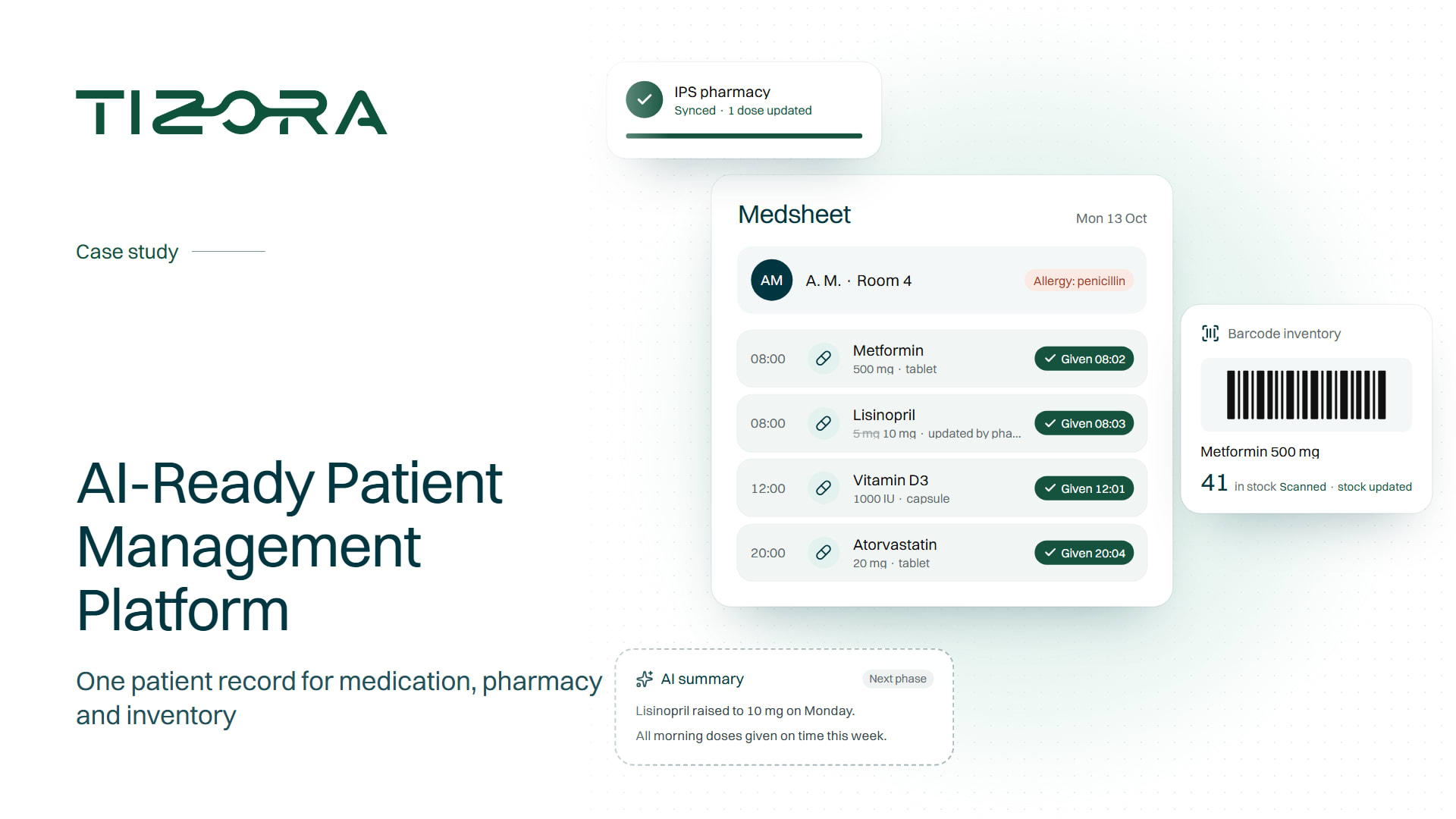
Medication workflows and a live medication sheet, synced with pharmacy systems, with barcode inventory tracking.
FHIR integration services
EHR integration software, pharmacy and scanner integrations through HL7 FHIR APIs and a normalization layer.
AI-ready data foundation
Structured data and decoupled services so summaries, alerts and forecasting can be added without reworking core workflows.
HIPAA-compliant software development built into every layer
We build healthcare software with security designed in from the first sprint. Patient and medication data is protected with encryption in transit and at rest, role-based access control and full audit trails across every workflow that touches it. We design to align with HIPAA, and responsibility for compliance rests with the healthcare organization. Free guide: Building AI-Ready Healthcare Software.
HL7 FHIR interoperability
FHIR-based APIs for data exchange between EHR, pharmacy and inventory systems.
Encryption, access control and audit trails
On every workflow, not only the records store.
AI-ready architecture
Decoupled microservices on AWS so intelligent features can be added later.

How our healthcare software development process works
Compliance and data mapping
We review how patient data is stored, moved and accessed, and map the controls each workflow needs.

Data architecture
We design the structured patient record and the integration layer for third-party systems.

Secure build and testing
We build services with access control, encryption and audit logging, and test them against agreed requirements.

Staged rollout
We deploy facility by facility or department by department, with staff training and parallel running.

Healthcare software we have built
How to choose a healthcare software development company
Ask every vendor these six questions before you shortlist. We answer them for our own work on a discovery call.
Will you sign a Business Associate Agreement, and will your cloud and subcontractors sign one too?
Which EHR and pharmacy systems have you integrated in production, and with what access or sandbox credentials?
Which FHIR version do you build to, and can you show a working integration flow?
What evidence backs a security claim? HIPAA has no official certification, so ask for a security assessment or penetration test, not a badge.
Who owns the code and the data after launch?
What do hosting, maintenance and support cost after go-live?
Engineering principles for healthcare software
HIPAA-aligned by design: Encryption, audit logging and role-based access on every service from day one.
Integration first: Normalize third-party data before it reaches the patient record.
AI-ready foundations: Structured data and decoupled services.
FAQ
Healthcare software development FAQs
A healthcare software development company designs, builds and maintains software for care providers and digital health teams, such as patient management systems, medication management software, EHR and pharmacy integrations, and secure data platforms. Tizora provides these healthcare software development services on AWS with security and HIPAA alignment designed in from the start.
HIPAA has no official software certification. Compliance depends on safeguards such as encryption, access control and audit trails, signed Business Associate Agreements, and how the healthcare organization uses the system. Tizora designs software to align with HIPAA, and responsibility for compliance rests with the healthcare organization.
HL7 FHIR is a standard for exchanging healthcare data through APIs. FHIR integration lets your platform read and write patient information from EHR, pharmacy and lab systems in a consistent format, so staff do not re-enter data or check several systems.
We build an integration layer that normalizes data from external systems, which often arrives in different structures with inconsistencies, before it joins one structured patient record. In the patient management platform we built, this layer connects third-party IPS pharmacy systems to the central record.
Yes. We connect EHR, pharmacy and inventory systems to one structured patient record through HL7 FHIR APIs and a normalization layer that cleans third-party data before it reaches the record. In the patient management platform we built, this layer connects third-party IPS pharmacy systems and barcode scanners to the central record, and the same approach applies to EHR integrations.
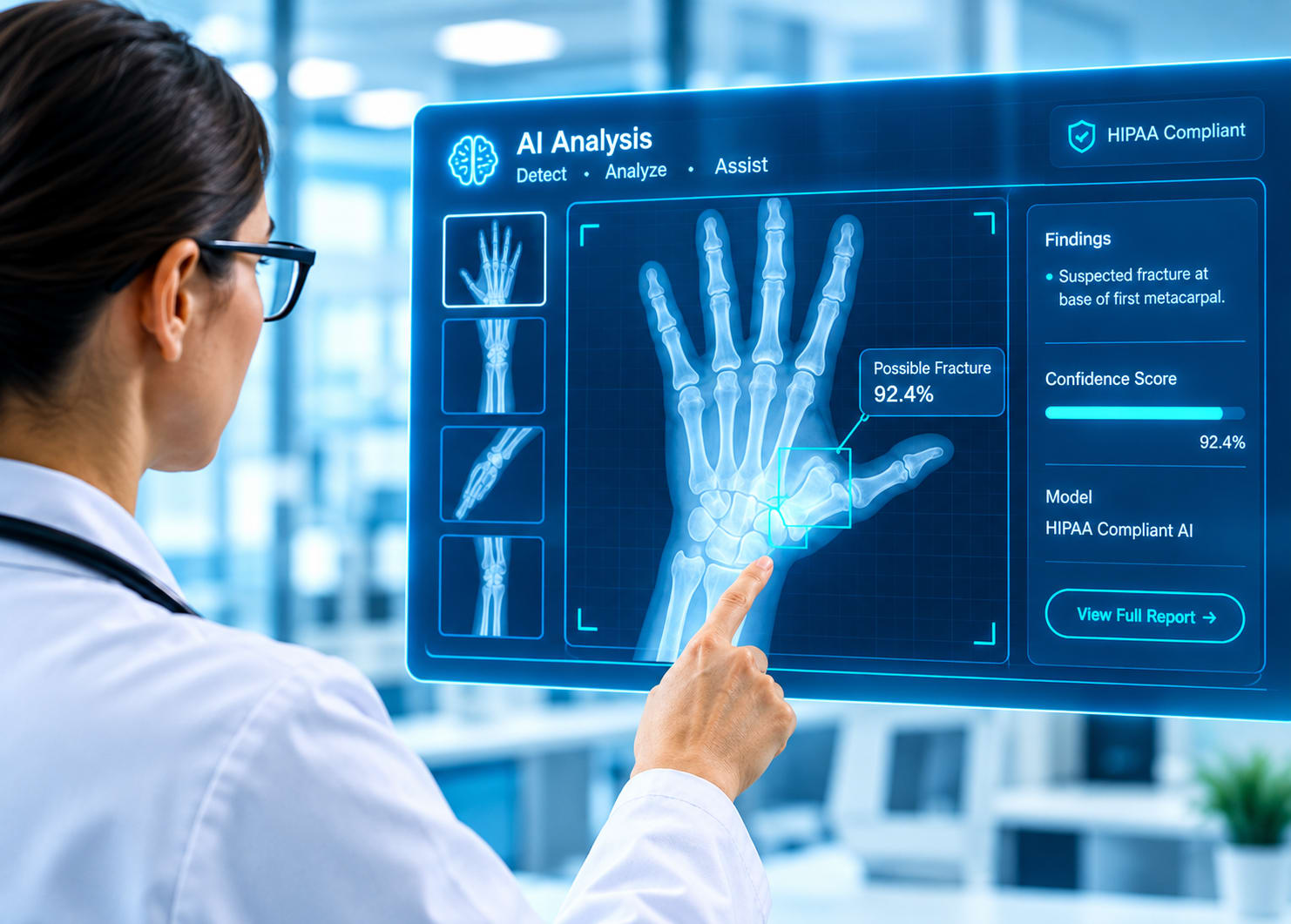
An AI-ready platform stores patient, medication, provider and inventory data in a structured form and runs on decoupled services, so features such as patient summaries, unusual-change alerts and inventory forecasting can be added later without reworking core workflows.
Yes, in two steps. First we build the structured data foundation and decoupled services that AI features depend on. Then we add features such as patient summaries, unusual-change alerts and inventory forecasting on top, without reworking core workflows. We build AI into the platform only where it helps care staff and never as a replacement for clinical judgement.
Timeline and cost depend on scope, the number of systems to integrate, and the security and compliance requirements. We fix both after a discovery phase that maps your workflows, data sources and integrations.
Yes. Our patient management work connects to third-party pharmacy systems, barcode scanners and existing patient records, and the platform is designed to plug in without replacing the systems you already run.
Ask whether they will sign a Business Associate Agreement, which EHR and pharmacy systems they have integrated in production, which FHIR version they build to, what evidence supports their security claims, who owns the code and data after launch, and what hosting and maintenance cost.
Talk to a healthcare software development company that builds for AI from day one
Tell us about your care workflows, pharmacy and EHR systems. In 30 minutes our healthcare software developers will show how a connected, custom healthcare software platform could fit and what it would take to launch.
